The Small Fish Store
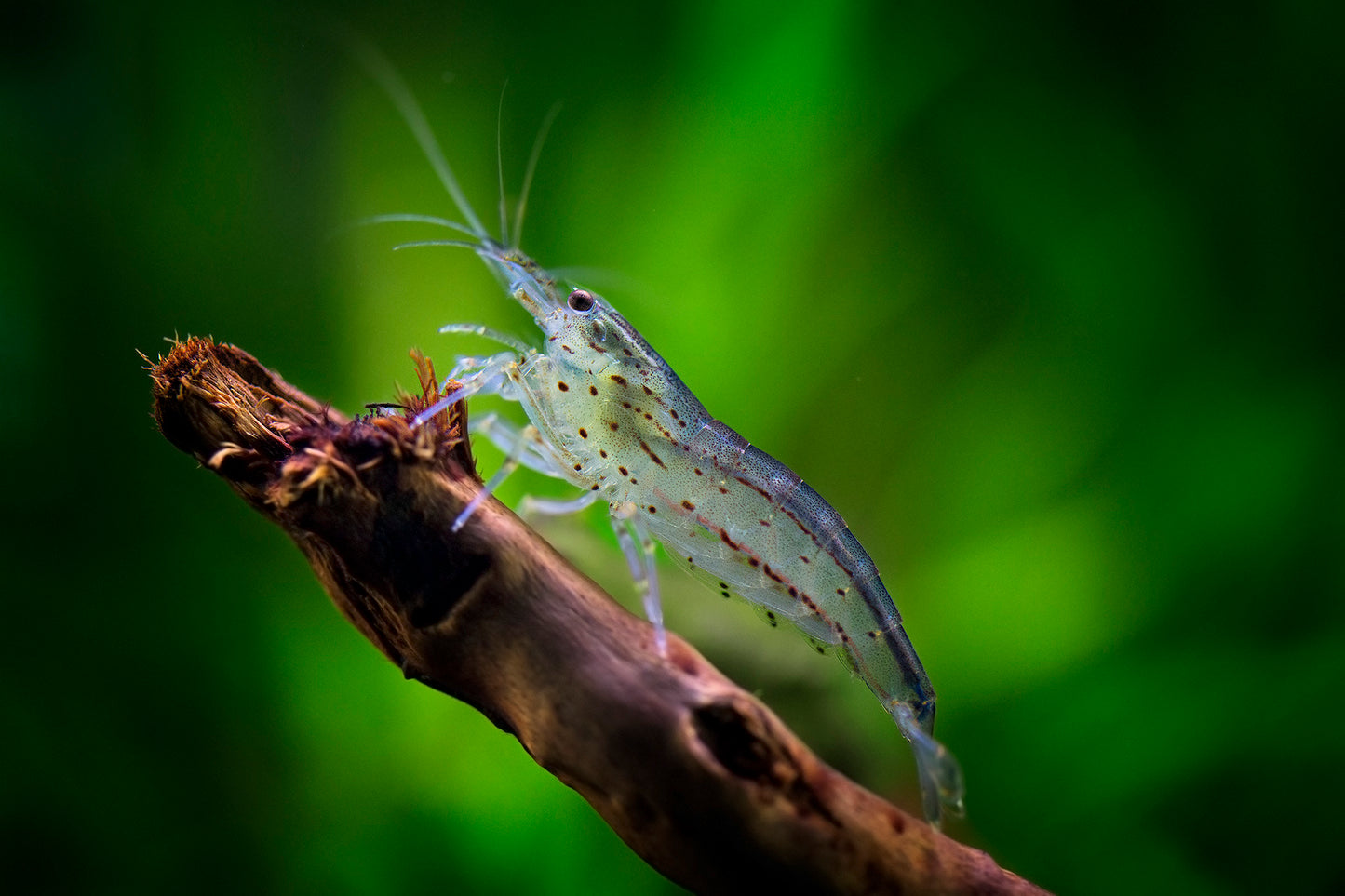
Amano Shrimp (Caridina multidentata) — Live Algae Eater
Amano Shrimp (Caridina multidentata) — Live Algae Eater
Couldn't load pickup availability
The Aquarium Hobby's Most Effective Algae Eater
If your planted tank is battling hair algae, thread algae, or diatoms, the Amano Shrimp is your answer. Introduced to the aquarium hobby by legendary aquascaper Takashi Amano in the early 1990s, Caridina multidentata remains the gold standard for natural algae control — decades later, nothing else comes close.
Unlike algae-eating fish, Amano Shrimp are small, peaceful, and add almost no bioload to your system. They work tirelessly 24/7, methodically grazing every leaf, rock, and surface — even picking hair algae and black beard algae that most other cleaners ignore.
Quick Stats
- Scientific Name: Caridina multidentata (formerly Caridina japonica)
- Adult Size: 1.5 – 2 inches (females up to 2.5 inches)
- Temperament: Peaceful
- Diet: Omnivore — algae, biofilm, blanched vegetables, shrimp pellets
- Tank Size: 10 gallons minimum
- Temperature: 70 – 80°F (21 – 27°C)
- pH: 6.5 – 7.5
- GH: 6 – 8 dKH
- TDS: ~200 ppm
- Ammonia / Nitrite: 0 ppm (fully cycled tank required)
- Lifespan: 2 – 3 years
- Breeding in Freshwater: No — larvae require brackish water
- Tank Compatibility: Community fish, dwarf shrimp, snails
What They Eat
Amano Shrimp are relentless scavengers and opportunistic algae grazers. Their preferred targets include:
- Hair algae & thread algae
- Diatoms (brown algae)
- Soft green algae on plants and hardscape
- Black beard algae (with a hungry group)
- Biofilm, decaying plant matter, leftover fish food
Pro tip: To keep them working on algae, reduce supplemental feedings. Like any creature given the choice, they'll go for the easy meal first.
Tank & Care Requirements
Amano Shrimp thrive in mature, well-cycled aquariums. Once established in a stable setup, they are extremely hardy.
- Recommended group size: 5+ shrimp (they are social and more active in groups)
- Stocking density: 1 Amano per 2 gallons as a general guideline
- Filtration: Sponge filter or pre-filter sponge recommended to protect shrimp
- Plants: They love densely planted tanks — more surface area means more grazing
- Lid required: Yes, Amano Shrimp are skilled escape artists
Avoid: Copper in any form (fertilizers, medications), large or aggressive fish, and unstable water parameters.
Compatible Tank Mates
Amano Shrimp are peaceful and do well with:
- Small community fish (tetras, rasboras, Endler's livebearers, danios)
- Corydoras catfish
- Bristlenose plecos
- Other dwarf shrimp (cherry shrimp, crystal shrimp) — they will not interbreed
- Nerite snails and mystery snails
Avoid: Medium to large cichlids, barbs, goldfish, or any fish large enough to swallow them.
Will They Breed in My Tank?
No. Amano Shrimp will mate in freshwater, and females regularly carry eggs — but the larvae require brackish to marine salinity to survive. In a standard freshwater aquarium, larvae die within hours of hatching. Successful breeding is possible but requires a dedicated brackish rearing tank and advanced husbandry. This is why most Amano Shrimp available in the hobby are wild-caught.
Molting
Amano Shrimp molt approximately once a month as they grow. After molting, they are temporarily soft and vulnerable — provide plenty of hiding spots. Leave the empty exoskeleton in the tank; the shrimp will consume it for the calcium. A clear, hollow shell is a molt — not a dead shrimp.
Frequently Asked Questions
How many Amano Shrimp do I need to control algae? A group of 5–10 is effective for most planted tanks up to 20 gallons. For heavy algae problems, more is better — Takashi Amano himself famously used them by the hundreds.
Can Amano Shrimp live with cherry shrimp? Yes. They are peaceful toward other shrimp and will not interbreed with Neocaridina species, such as cherry shrimp.
Do Amano Shrimp eat plants? No. They graze algae off plants but will not eat healthy plant tissue. They may nibble on dying or decaying leaves, which is beneficial.
How long do Amano Shrimp live? In a well-maintained aquarium, 2 to 3 years is typical.
Why aren't my Amano Shrimp eating the algae? They're likely eating tastier supplemental food instead. Reduce or pause feeding for a few days to redirect their attention to algae.
Are Amano Shrimp good for beginners? Yes! They are one of the most beginner-friendly invertebrates available.
Share